

HOW IT WORKSTHE scalable
BIOLOGY OF
coral seeds
From rescuing coral to growing it where it lives, at scale.
01 · THE IDEA NATURE ALREADY KNOWS
HOW TO HEAL ITSELF.
WE JUST GIVE IT BACK
THE CONDITIONS TO DO IT
A coral can regrow from a few of its own cells, the same way our skin closes a wound. The problem is speed and scale : reefs are dying far faster than they can naturally recover. Coral Seeds borrows the tools of regenerative medicine to help coral heal faster, in far greater numbers, and then returns it to the Ocean.
02 · THE JOURNEY OF A CORAL SEEDFROM ONE CORAL
TO A LIVING REEF
5 steps, all of them the coral's own biology, given a head start. Here's what actually happens in plain words.
01
IT STARTS WITH ONE CORAL
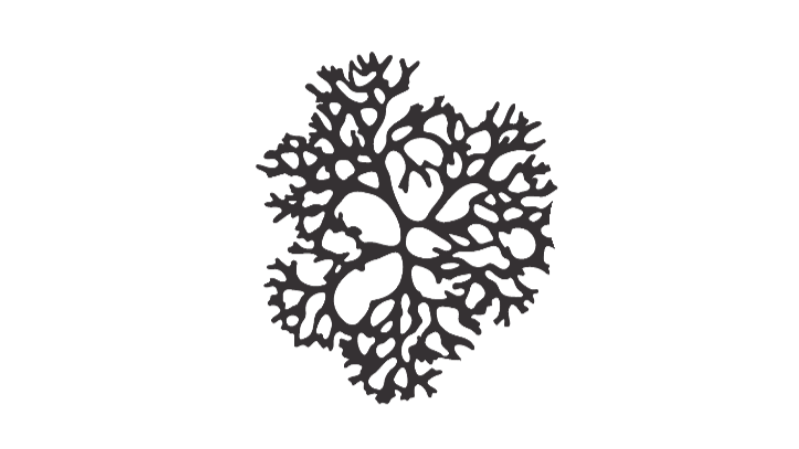
We take a small sample from a single, healthy native coral and gently separate it into its individual living cells, no harm to the reef it came from.
02
ONE BECOMES BILLIONS
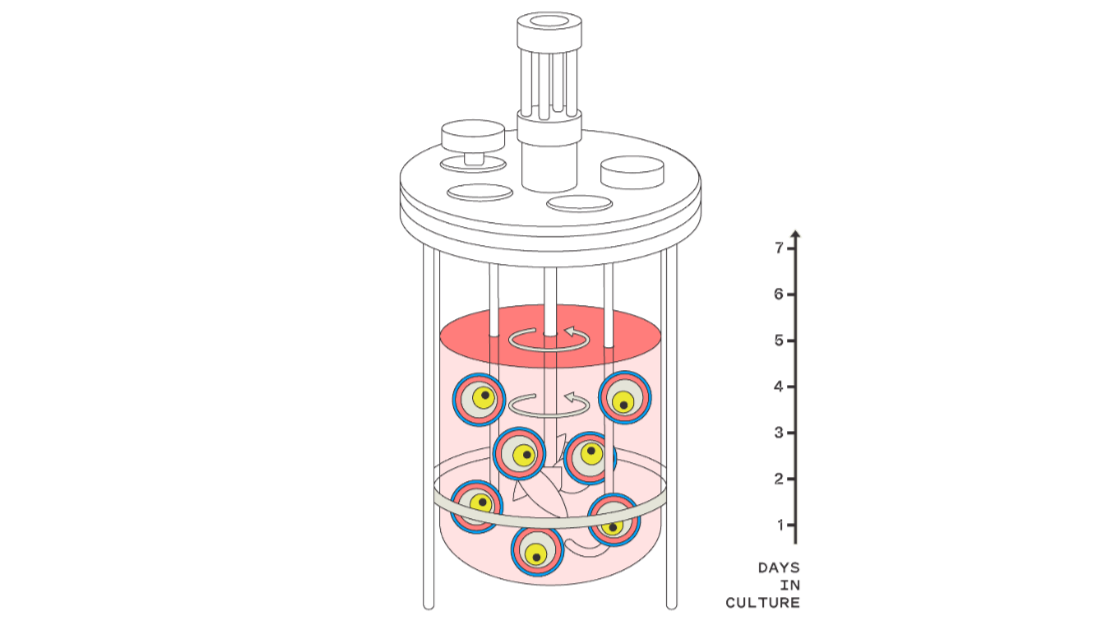
Each cell is wrapped in a tiny protective capsule of natural gel, the same idea used to grow human stem cells. From one coral, we can create billions of these living seeds.

03
GROWING IN SAFE WATER
The seeds grow in gently moving tanks that recreate ideal Ocean conditions. Inside their capsules, the cells reorganise on their own into tiny, viable young corals.
04
BACK TO THE REEF
When they're strong enough, the young corals are returned to a damaged reef, chosen with local teams and scientists, and prepared to give them the best chance to take hold.

05
AND IT KEEPS GOING
Every reef is monitored for years, and what we learn makes the next batch stronger. The corals that thrive in warmer water help us grow the next generation, so the work compounds over time.
03 · WHAT MAKES IT DIFFERENT 3 THINGS WE
DO DIFFERENTLY
Unfortunately, most reef restoration is slow, manual, and limited to a handful of corals at a time. Our approach changes 3 things at once, how much, how natural, and who's involved.
01 -
RESTORATION
THAT
SCALES
-
SEEDS FROM ONE CORAL
-
NOT JUST SPAWNING SEASON
-
EVERY SEED, EVERY REEF
02 -
With
native
species
-
LOCAL SPECIES ONLY
-
NOTHING ENGINEERED
-
CHOSEN TO HANDLE WARMER OCEAN
03 -
HEALING
WITH
COMMUNITIES
-
OF MONITORING & CARE
-
TEAMS AND TRAINING
-
RESULTS SHARED PUBLICLY
The first living coral seeds are already being grown in our laboratory in Bordeaux.
Keep every reef's coral safe, before the next heatwave
Marine heatwaves can wipe out a reef in a single season. A coral bank preserves its local corals ahead of time, so the reef can start again with its own heritage.
CORAL BANKLocal
Each bank holds the corals of one reef, kept close to it.
Ready before the crisis
Built ahead of heat stress events.
A restart
When the reef is hit, its own coral is there to rebuild it.
Our Team

Marine
Piers
Co-founder & CEO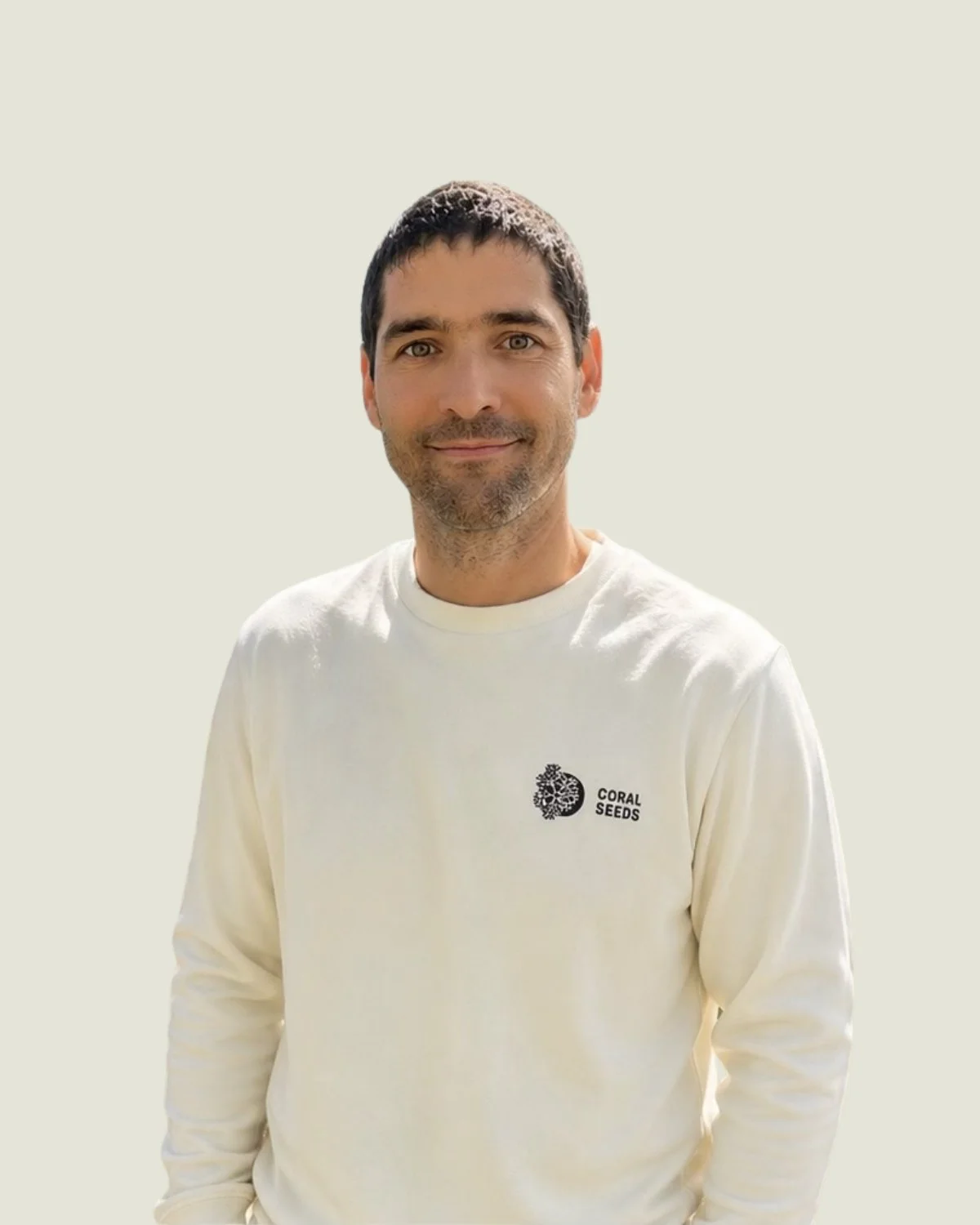
Philippe Massat
Co-founder & CSO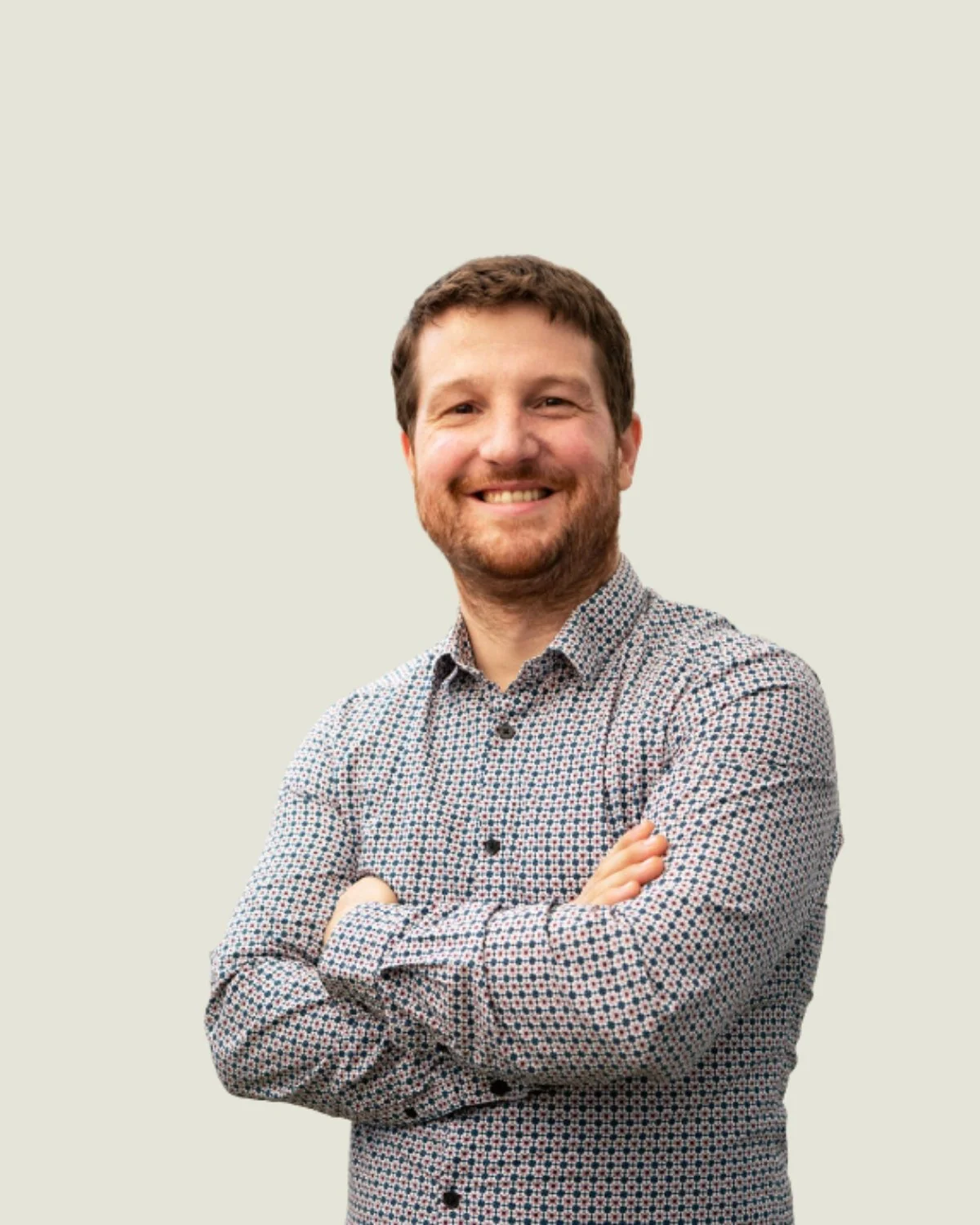

Gaelle
Recher
CNRS researcher 
Pierre
Nassoy
CNRS research directorMaxime
Feyeux
Co-founder & CTOOur scientific committee
Bringing together world-class minds across marine biology, regenerative medicine and bioengineering because healing a reef takes more than one field of science.
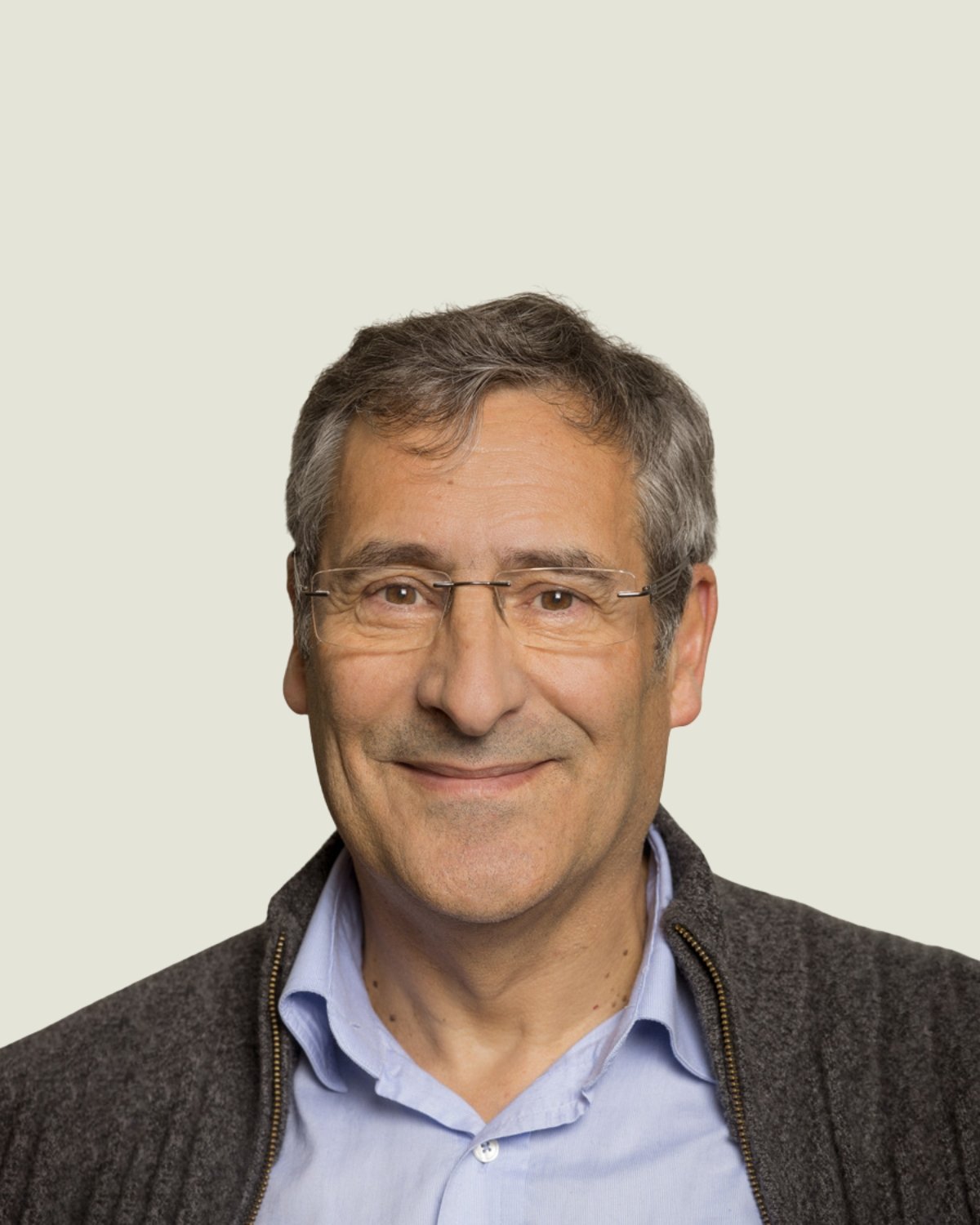
DR. Gilles
Boeuf
Biologist & speaker
DR. Isabelle Domart Coulon
Coral biologist at the National Museum of Natural History
Maxime
Feyeux
Founder & ex-CSO Stem cell biologist Treefrog therapeuticsDR. Pierre
Nassoy
CNRS Research Director